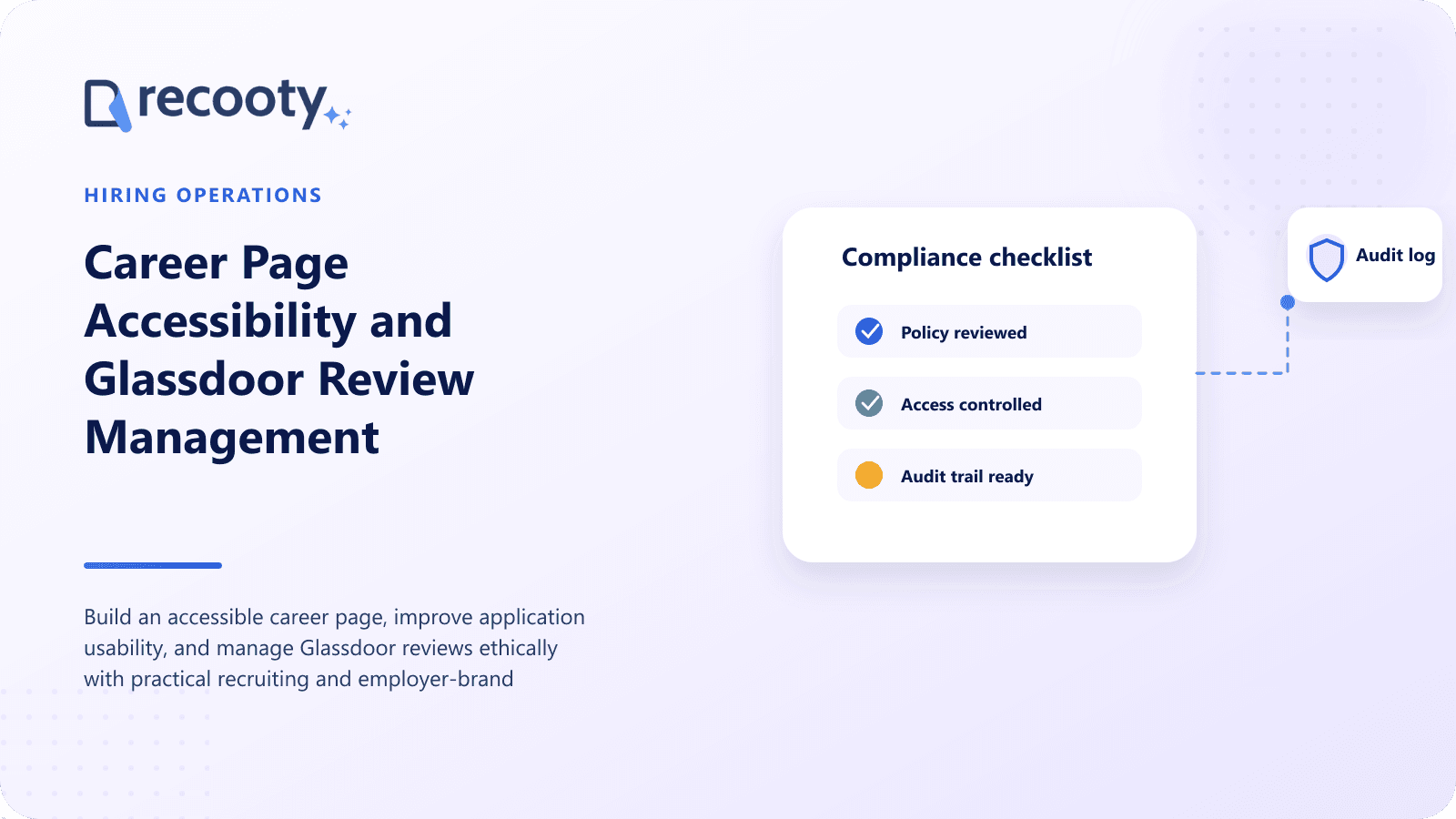
Pay Transparency Laws and Job Ads: A 2026 Employer Guide
Learn what pay transparency laws require in job ads, how remote roles are affected, and how to build salary-range checks into an ATS publishing workflow.

CONTENTS
- 00Introduction
- 01Key takeaways
- 02What is pay transparency in a job posting?
- 03Which 2026 pay transparency laws affect job ads?
- 04What does California require in a job posting?
- 05What does New York require?
- 06What extra information do Washington and Colorado ask for?
- 07What changed recently in Illinois, Massachusetts, and New Jersey?
- 08Do pay transparency laws cover remote jobs?
- 09What should a compliant salary range include?
- 10How can an ATS prevent noncompliant job ads?
- 11How should employers write pay in a job description?
- 12How often should job-ad rules be reviewed?
- 13Frequently asked questions
Pay transparency laws may require a job ad to state a good-faith salary or hourly range. Some jurisdictions also require benefits, other compensation, a job description, or an application deadline. Coverage can depend on employee count, work location, where applications are accepted, or whether a remote employee reports to an office or supervisor in the jurisdiction.
Employers should not rely on one national job-posting template. Build location-aware fields and approval rules in the ATS, then have employment counsel confirm the rules for every place a role can be performed. This guide provides operational information, not legal advice.
Key takeaways
- A vague phrase such as “competitive pay” does not satisfy laws that require a range.
When the role is ready, you can post a job for free to start reaching candidates. - Use the minimum and maximum base pay the employer genuinely expects to offer when the ad is published.
- Benefits, bonuses, commissions, equity, and application deadlines may need separate disclosure.
- Remote postings can trigger laws outside the employer's headquarters.
- Employers can remain responsible when an engaged recruiter or job board publishes an incomplete ad.
- The ATS should block publication when required compensation fields, locations, or approvals are missing.
What is pay transparency in a job posting?
Pay transparency tells applicants what an employer expects to pay. A compliant range generally reflects the role, location, approved budget, level, internal pay structure, and acceptable qualifications when published. An open-ended amount such as "$70,000 and up" can fail rules requiring both ends.
Which 2026 pay transparency laws affect job ads?
Several U.S. states and cities have posting laws. This selected, non-exhaustive table reflects official guidance available on September 15, 2026.
| Jurisdiction | Covered employer threshold | Job-ad disclosure highlighted by official guidance |
|---|---|---|
| California | 15 or more employees | Pay scale for a position that may be filled in California |
| New York | 4 or more employees | Good-faith salary or hourly range and a job description |
| Washington | 15 or more employees | Wage scale or salary range, benefits, and other compensation |
| Illinois | 15 or more employees | Pay scale and benefits for covered internal and external postings |
| Massachusetts | 25 or more employees in the Commonwealth | Good-faith annual salary or hourly wage range |
| New Jersey | 10 or more employees over 20 calendar weeks, plus a covered connection | Salary range, benefits, and other compensation information |
| Colorado | Check current coverage rules | Compensation, benefits, and application deadline information |
Local ordinances and rules in other states may add obligations. Check the current law whenever a job opens, because thresholds, definitions, regulations, and enforcement guidance can change.
What does California require in a job posting?
The California Labor Commissioner's guidance says employers with 15 or more employees must include the salary or hourly range they reasonably expect to pay upon hire. It interprets coverage to include roles that may be filled in California, in person or remotely, including ads placed through third parties.
What does New York require?
New York State guidance says employers with four or more employees must provide a good-faith annual salary or hourly range and job description. Coverage includes work performed partly in New York and work outside the state that reports to a New York supervisor, office, or work site.
What extra information do Washington and Colorado ask for?
Washington's guidance requires covered postings from employers with 15 or more employees to include a range, benefits, and other compensation. Colorado's official materials also identify missing compensation, benefits, or application deadlines in covered postings. A salary range alone may therefore be incomplete.
What changed recently in Illinois, Massachusetts, and New Jersey?
Illinois requirements took effect January 1, 2025, covering employers with 15 or more employees. Massachusetts requirements took effect October 29, 2025, with a 25-employee threshold in the Commonwealth. New Jersey's law took effect June 1, 2025, and can cover employers with 10 or more employees over 20 weeks plus a qualifying state connection.
Do pay transparency laws cover remote jobs?
Yes. Coverage may depend on where employees work, applications are accepted, or positions report. Removing a state from the location field does not settle the question when people there can apply or perform the work.
Define remote eligibility before publishing. If pay differs by location, list a clear range for each geographic zone and explain which range applies. One very wide national range may not give applicants a legitimate picture of expected pay and may conflict with good-faith requirements.
What should a compliant salary range include?
The safest operational pattern is to separate compensation components rather than combining them into one inflated number:
- Base salary or hourly wage minimum and maximum
- Pay period and currency
- Location or zone tied to the range
- Commission or tip basis, where applicable
- Bonus or equity eligibility, described separately
- General benefits description where required
- Application deadline where required
Market data does not replace an approved budget. Recooty's AI Salary Estimator can provide current market information, but a responsible person should approve the range the company will pay.
How can an ATS prevent noncompliant job ads?
The ATS should treat compensation as structured data, not text a recruiter remembers to paste into the final paragraph. Build the publishing workflow around these controls:
- Require work location, remote eligibility, reporting location, and legal employer.
- Trigger fields for base pay, currency, frequency, benefits, other compensation, and deadline.
- Route the range to compensation, HR, finance, or legal approvers.
- Block direct and job-board publication until required fields are complete.
- Send one approved version to the careers page, boards, agencies, and social channels.
- Keep the published range, approvals, edits, dates, and destination history.
When a range changes, update every controlled copy and record what changed and why.
How should employers write pay in a job description?
Use plain language close to the job title and location, where candidates can find it quickly. For example: “Base salary: $85,000 to $105,000 per year for candidates working in New York. This role may also be eligible for an annual bonus and the benefits listed below.”
Explain location or level differences instead of hiding them in a huge range. Recooty's guide to writing a job description covers duties, outcomes, qualifications, and applications.
How often should job-ad rules be reviewed?
Review the rule matrix quarterly and after adding a location or changing remote eligibility. Assign one owner to update ATS templates, then sample live career-site, job-board, agency, social, and internal ads.
Frequently asked questions
Do all U.S. job postings need a salary range?
No single federal rule requires every private employer to put a salary range in every U.S. job ad. State and local laws cover many postings, and remote work can extend their reach. Employers may choose nationwide disclosure as a consistent policy after legal review.
Can a job posting say “competitive salary”?
That phrase can accompany a numerical range, but it generally cannot replace one where the law requires minimum and maximum pay. Use a fixed amount when appropriate or a good-faith range with currency and pay period.
Must bonuses and benefits be included?
It depends on the jurisdiction. Washington, Illinois, New Jersey, and Colorado include benefits or other compensation in their posting rules. New York distinguishes base pay from optional benefits and other compensation. Store these components in separate ATS fields.
Is an employer responsible for a recruiter's posting?
Often, yes. Several state rules cover third parties engaged by the employer. Give agencies and job boards the approved compensation data, restrict unauthorized edits, and audit the live posting. Treatment of independently scraped ads may differ.
Practical recruiting playbooks, HR tutorials and hiring trends from the team behind Recooty — hiring software for growing teams.