How to Adjust Your Recruitment Process to Handle a 10x Increase in Applications
The recruitment process has been fundamentally transformed. While the task isn’t necessarily easier, it’s different, and now requires new strategies to handle the increase in…


CONTENTS
- 00Introduction
- 01Key takeaways
- 02Current Market Trends and How the Tech Talent Acquisition Landscape Has Evolved
- 03Why Your Recruitment Strategies Need an Update & How Technology Can Help Streamline Hiring
- Step 1: Clear and Targeted Job Descriptions
- Step 2: Optimizing Your Candidate Pipeline
- Step 3: Managing High Volumes of Applications
- Step 4: Optimize Your Careers Page
- Step 5: Utilize Social Sharing for Wider Reach
- 04Design the high-volume workflow before choosing software
- 05Conclusion
- 06A 10x-application response plan
- 07Frequently Asked Questions
Ten times more applications do not require ten times more manual review. First reduce avoidable volume with a precise job page, then use structured questions and workflow automation to surface job-related evidence. Keep a human accountable for decisions and protect candidates from silent or unexplained rejection.
Recruiters have always needed a reliable way to find the right candidates. A sudden increase in applications adds a second problem: the team must separate job-related evidence from noise without delaying every applicant. Recruitment techniques and workflow design matter more than adding another inbox.
Start by narrowing the role requirements, then make the application and screening steps consistent. If your current system cannot handle the volume, use the best recruiting software guide for 2026 to compare high-volume workflows, AI controls, reporting, and implementation demands.
Key takeaways
- High-volume hiring needs a narrower job brief, structured screening, clear service levels, and fast candidate communication.
- Reduce noise before it reaches the recruiter by stating must-haves, pay or range where required, location, schedule, and the application steps.
- Use automation for triage and administration, not as an unreviewed final decision maker.
- Ask the same job-related screening questions, keep evidence-based notes, and audit shortlist patterns for unintended exclusion.
- Track time to shortlist, qualified conversion, candidate drop-off, feedback completion, offer acceptance, and early quality.
Current Market Trends and How the Tech Talent Acquisition Landscape Has Evolved
If you’ve been following the tech world recently, you’re probably aware of the ongoing wave of layoffs. Between 2026 and 2026, 60,000 jobs have been cut across more than 250 companies, creating a flood of job seekers. At the same time, companies are focusing less on rapid growth and more on profitability, resulting in fewer job openings.
This has led to new challenges for recruiters:
- Too many job applications, making it overwhelming to filter through them all.
- Difficulty in finding the right qualified candidates within such a large pool.
- Time management issues, as recruiters handle more applicants but fewer roles, leading to slower hiring processes.
The recruitment process has been fundamentally transformed. It now needs strategies that handle more applications while preserving decision quality and candidate communication.

Why Your Recruitment Strategies Need an Update & How Technology Can Help Streamline Hiring
The traditional hiring strategy often involves:
- Creating a basic job profile with general requirements.
- Posting a generic job ad on job boards and waiting for applications.
- Receiving a high volume of applications, many of which are irrelevant.
- Spending time manually sifting through resumes.
This approach is slow when applications increase. Using AI recruitment tools and Applicant Tracking Systems (ATS) can help streamline job application management.
Step 1: Clear and Targeted Job Descriptions
One of the most important aspects of the recruitment process is crafting clear, specific, and relevant job descriptions. Vague or overly broad postings tend to attract irrelevant applicants, increasing the burden on recruiters who must sift through low-quality resumes.
Here’s how you can fine-tune your hiring strategy:
- Outline specific qualifications such as skills, experience, and certifications required for the role.
- Follow specific role-based guidelines to maintain consistency and optimize your job descriptions for search engines. This improves visibility and sets clear expectations for applicants.
- Collaborate with your hiring team to ensure everyone is aligned with the desired qualifications. This improves the overall talent pool and simplifies job application management.
- Highlight your company’s values, mission, and culture to attract potential employees who align with your vision.
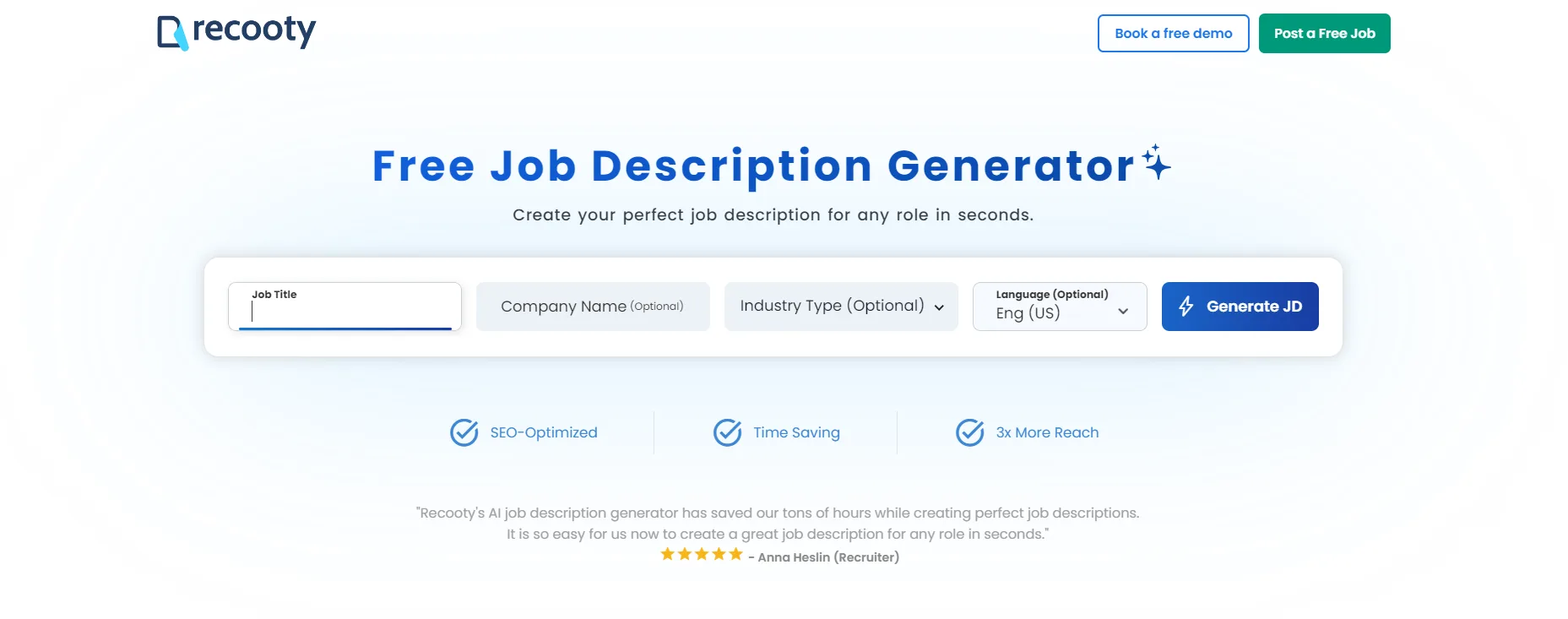
Incorporating AI recruitment tools such as Recooty’s AI-powered job description generator can help you create optimized job descriptions that attract more qualified candidates.
Step 2: Optimizing Your Candidate Pipeline
Once you’ve crafted a clear and specific job description, the next step is building your candidate pipeline. This involves deciding between inbound recruitment methods or outbound recruitment efforts, based on the role you’re hiring for.
- For high-traffic roles, where you expect many job applications, prioritize outbound recruitment, like direct headhunting via LinkedIn, to avoid an overload of unqualified applications.
- For niche roles, focus on inbound recruitment strategies such as posting on job boards and utilizing social media to attract high-quality talent more naturally.
The message in your job posts is key:
- Answer the candidate’s question: “What’s in it for me?” Instead of generic statements about company culture, present unique reasons why this job stands out.
- Highlight financial stability and growth prospects because, in uncertain markets, job seekers are looking for stability.
Step 3: Managing High Volumes of Applications
Recruiters usually get excited by a high volume of job applications, but quantity doesn’t always translate to quality. Sorting through irrelevant resumes takes time and energy, which is why prioritizing quality candidates over quantity is crucial.
Wouldn’t it be better to have 50 qualified candidates where 60% meet your criteria, rather than 300 resumes where only 10% are relevant?
This is where using an Applicant Tracking System (ATS) alongside technology becomes an essential part of the hiring process. An ATS helps to efficiently track and categorize applications, giving insights such as:
- How many candidates meet the role’s specific criteria.
- Which recruitment sources are producing the most qualified candidates.
In addition, you can use knockout questions through an ATS to filter out unfit candidates early in the process. Use questions like:
- “Do you hold the required certification for this role?”
- “Are you available to start immediately?”
AI recruitment tools can further optimize the job application process, enabling you to focus only on the best applicants.
Step 4: Optimize Your Careers Page
An optimized careers page is essential if you want to streamline your online recruitment process. By providing clear information about your company, job roles, and the application process, candidates can self-filter before even applying. This results in fewer irrelevant resumes, making hiring velocity faster.
If you don’t have a careers page, you can easily build one that supports your hiring efforts. Shortening the recruitment window also ensures that you attract more serious job seekers. A focused time frame encourages urgency and reduces the volume of irrelevant job applications.
Step 5: Utilize Social Sharing for Wider Reach
Platforms such as LinkedIn, Twitter, and Facebook provide unique ways to extend your recruitment outreach. Sharing job openings across these platforms not only reaches more active job seekers, but also networks with passive candidates who might not be checking job boards frequently.
Encouraging your team to share postings within their networks broadens your candidate pipeline significantly. Ensure your posts reflect your company culture, and always include a link to the careers page for easy application.
Design the high-volume workflow before choosing software
Software helps when it supports a clear process. SHRM’s 2026 talent-acquisition material describes prescreening as usually brief, often 20 minutes or less, and useful for high applicant volume. It also distinguishes structured interviews, where candidates receive the same questions, from conversational formats. Use that structure to make automation auditable rather than simply faster. Review SHRM’s interview guidance.
| Workflow control | What to configure | Health signal |
|---|---|---|
| Role clarity | Three to five genuine must-haves, schedule, location, pay, and success outcomes | Application relevance and completion |
| Pre-screen | Two or three job-related knockout questions and a consistent rubric | Qualified rate and false-negative review |
| Triage | Duplicate detection, missing-information flags, and human review queues | Time to shortlist and override rate |
| Communication | Acknowledgement, status updates, and response service level | Candidate drop-off and response time |
| Interview | Same core questions and evidence-based scorecard | Feedback completion and inter-rater consistency |
| Governance | Access controls, audit records, appeals or review path, and retention rules | Error patterns and candidate complaints |
High-volume hiring guides commonly focus on the same gap: application volume must be separated from decision quality. SHRM also advises auditing shortlist patterns when AI or automation is used, including where shortlisted candidates come from and how career histories are represented. Read SHRM’s human-judgment guidance.
Conclusion
The recruitment world is always evolving, and your hiring strategy needs to evolve with it. There is no singular solution, so continuous adaptation and refinement of your recruitment process is essential to match today’s fast-changing market.
Relying solely on manual processes can slow you down. Using AI tools and Applicant Tracking Systems can help, but the workflow still matters. Technology is only as good as the recruitment strategy supporting it.
Success is a combination of modern tools and a well-planned, flexible approach, tailored to your specific recruitment needs.
A 10x-application response plan
- Freeze the role requirements and remove nonessential criteria.
- Improve the job page so candidates can self-select on the work, location, schedule, pay, and process.
- Add a small set of job-related screening questions and define the pass standard in advance.
- Set recruiter and hiring-manager response targets so qualified candidates do not wait silently.
- Review false negatives, candidate drop-off, source quality, and early outcomes before changing the rules.
For implementation support, read how to reduce time to hire with an ATS and pre-screening interview questions.
Frequently Asked Questions
How do I screen hundreds of applications fairly?
Define role-specific must-haves, use the same screening questions and rubric, record evidence, and audit who advances and who is excluded. Automation should assist triage, not make an unexplained final decision.
Should I use AI to reject applicants automatically?
Be cautious. Test for errors and disparate impact, explain the workflow internally, provide human review, and follow applicable employment and accessibility requirements.
What should I measure in high-volume hiring?
Track time to shortlist, qualified application rate, application completion, stage conversion, candidate response time, feedback completion, offer acceptance, and early quality or retention.
How can a job description reduce application volume?
State the real work, must-have skills, location, schedule, compensation information where required, success measures, and selection steps. Specificity helps people self-select.
When should a team buy high-volume recruiting software?
Consider it when manual triage, scheduling, communication, or reporting is the bottleneck. Test a real role and compare time saved with setup, review, integration, privacy, and support costs.
How can I handle a sudden increase in job applications effectively?
Use an applicant tracking system to organize applications, automate routine sorting, and record the evidence behind each decision. Keep human review for exceptions, overrides, and final selection.
Why are clear job descriptions important in recruitment?
Clear job descriptions attract more relevant candidates, reduce avoidable applications, and help people judge whether their skills, location, schedule, and expectations match the role.
How does a careers page improve recruitment efficiency?
A careers page centralizes openings, explains the work and hiring process, and lets candidates self-select before they apply. That can reduce unqualified applications and repeated questions.
What is the benefit of social sharing in recruitment?
Sharing job openings on LinkedIn, Twitter, Facebook, and employee networks reaches active and passive candidates. Use source tags so you can compare the quality of applicants from each channel.
Practical recruiting playbooks, HR tutorials and hiring trends from the team behind Recooty — hiring software for growing teams.